

Embarking on a journey through Cambodia is an exploration of contrasts and cultural richness. From the ancient wonders of Angkor Wat to the bustling markets of Phnom Penh, Cambodia weaves a tapestry that seamlessly blends history, spirituality, and modern vibrancy. The allure lies not only in the awe-inspiring temples that whisper tales of an illustrious past but also in the warm smiles of locals, the vibrant street life, and the diverse landscapes that unfold as you traverse the country. Whether cruising along the Mekong River, savoring the flavors of Khmer cuisine, or witnessing the resilience of a nation emerging from a complex history, Cambodia offers a travel experience that is both enlightening and profoundly rewarding. On this trip we spent four days in Siem Reap. Join us on a spiritual journey through this fascinating country.
Cambodia, officially known as the Kingdom of Cambodia is a country in Southeast Asia neighboring Thailand, Vietnam and Laos. The country has been through a tough and tumultuous past including wars, genocides and dictatorships. Through all that Cambodia has managed to conserve and protect some of its most iconic national monuments, the temples. Cambodia is home to the world’s largest religious complex, Angkor Wat which is also reflected on the country’s national flag.
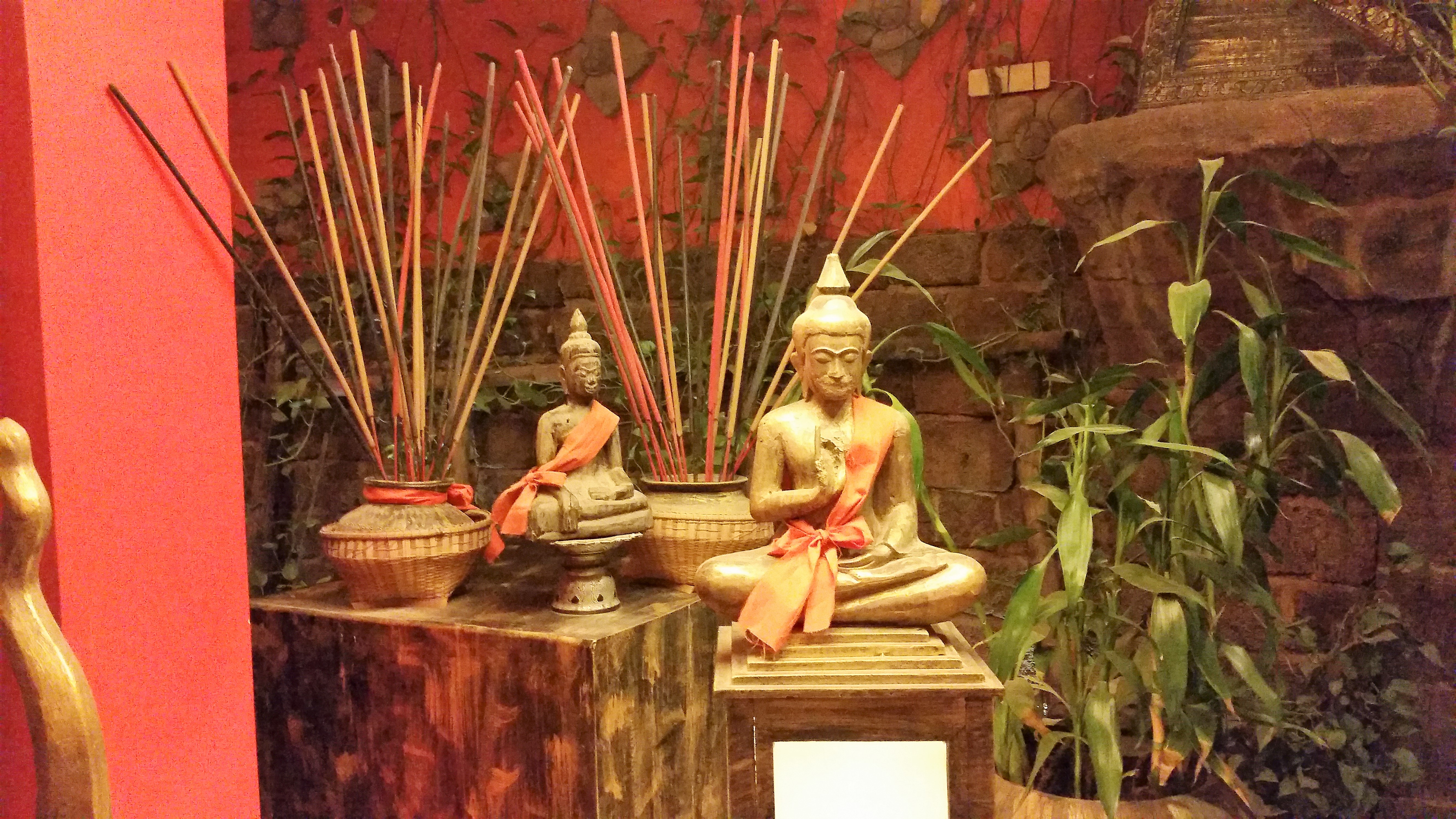
The largest city of Cambodia is the capital Phnom Penh. With just over 1.5 million people it is the government and administrative area of the country. 95 % of Cambodia’s population is Buddhist and more specifically follows Theravada Buddhism. It is not unusual to see statues of Buddha everywhere you go. Buddhism has been a part of the Khmer people’s lives for over 2000 years.
The garment industry is the largest employer in Cambodia followed by tourism. This leads us to the Siem Reap Province. Just 198 miles (320 km) northwest of Phonm Penh is the much smaller city of Siem Reap, also known as the gateway to the ancient world. Originally only visited by backpacker with a sense of adventure due to the difficulty of getting there, today Siem Reap is fully developed and able to welcome tourists of all ages.

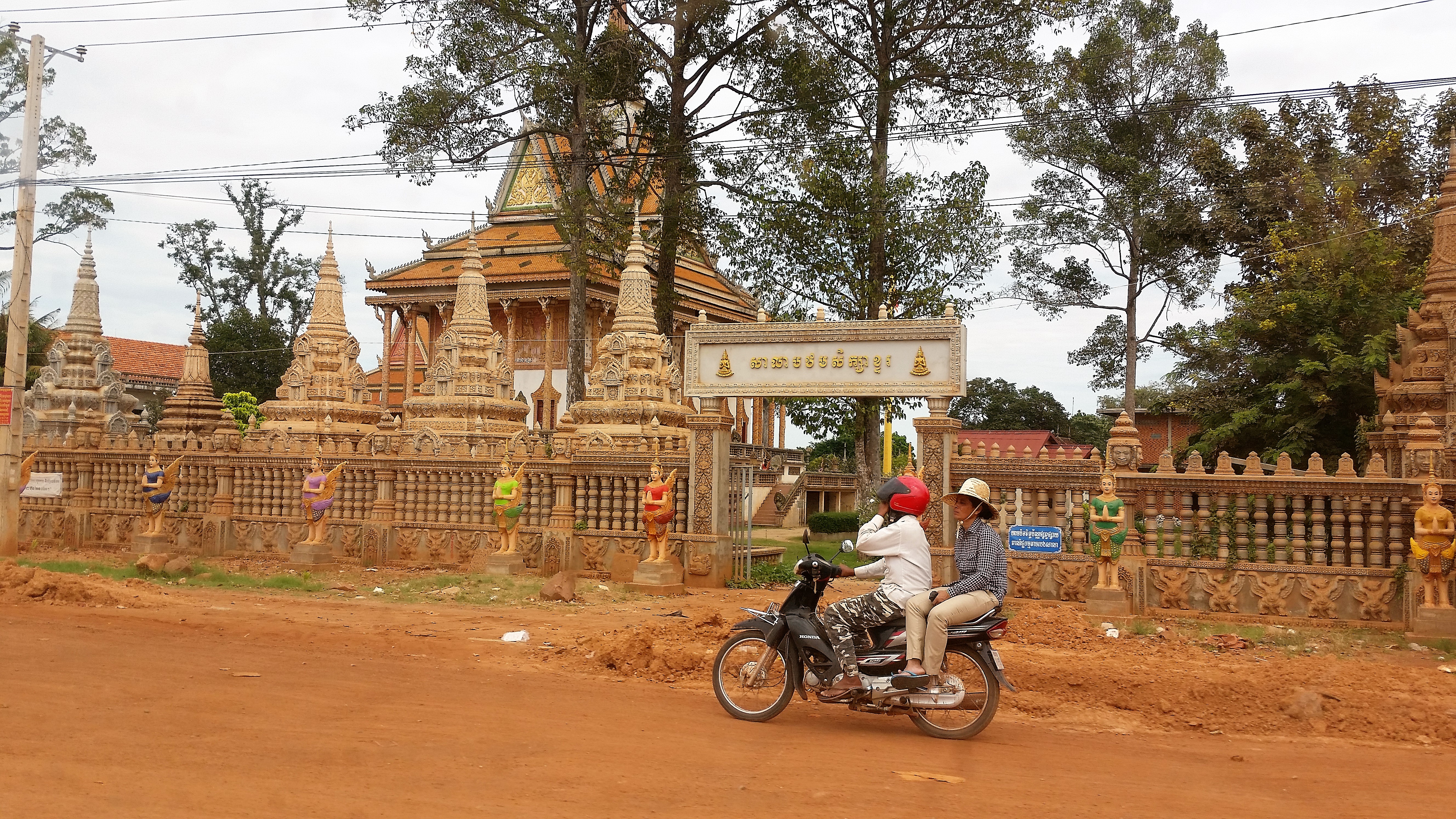
Siem Reap can easily be accessed from Phnom Penh by plane, bus or as we decided to do…hire a car with a driver. The entire journey was supposed to take about 5 hours, it took closer to 7 hours due to the conditions of the road. There was not much traffic, but the main road was under construction (meaning it was mostly a dirt road). For the majority of the drive we were surrounded by a cloud of dust making it difficult to see oncoming traffic. But we made it to Siem Reap safe and sound and what an adventure it was.
Once in Seam Reap we were exhausted but very excited to embark on our temple tour the following day. Siem Reap is a small town full of life. We met some of the most wonderful people during our stay. The easiest way to get around town is via a tuk tuk, a two wheeled carriage pulled by a motorcycle. It is extremely cheap and easy to catch one since they are everywhere. And maybe if you are lucky, you will meet Mr. Nang (tuk tuk driver per certificate posted in tuk tuk). He spoke little to no English, had no teeth, but carried around by far the biggest and most genuine smile we had ever seen.


It was heartwarming to see people who only earn a few dollars a day, but were so happy. Cambodia’s people really gave us some food for thought. In a country where people don’t have much they still choose to get up every morning, put on a genuine smile and make our day!
While visiting Siem Reap, we stayed at the beautiful Golden Temple Hotel. To this day, it is one of my favorite hotels we have ever stayed at. This colorful and beautifully furnished hotels embodies everything that is Cambodia. The staff is wonderful and the location is convenient for all of your day trips.
Finally it was time to visit the national treasures of Cambodia, the Angkor Archaeological Park of Temples, the Banteay Srei and Roluos Temple areas.
Angkor Thom
Most people start their day with visiting the Angkor Wat thus making it quite crowded in the morning, so we decided to start with Angkor Thom. This great ancient city is surrounded by a 26 ft (8 m) tall wall forming a square. Each wall runs for approximately 1.9 mi (3 km). There are 5 entries into the complex, each gate decorate with a 75 ft (23 m) tall tower crowned with four heads facing in four directions. The gates into Angkor Thom are among the most photographed ancient Cambodian ruins.
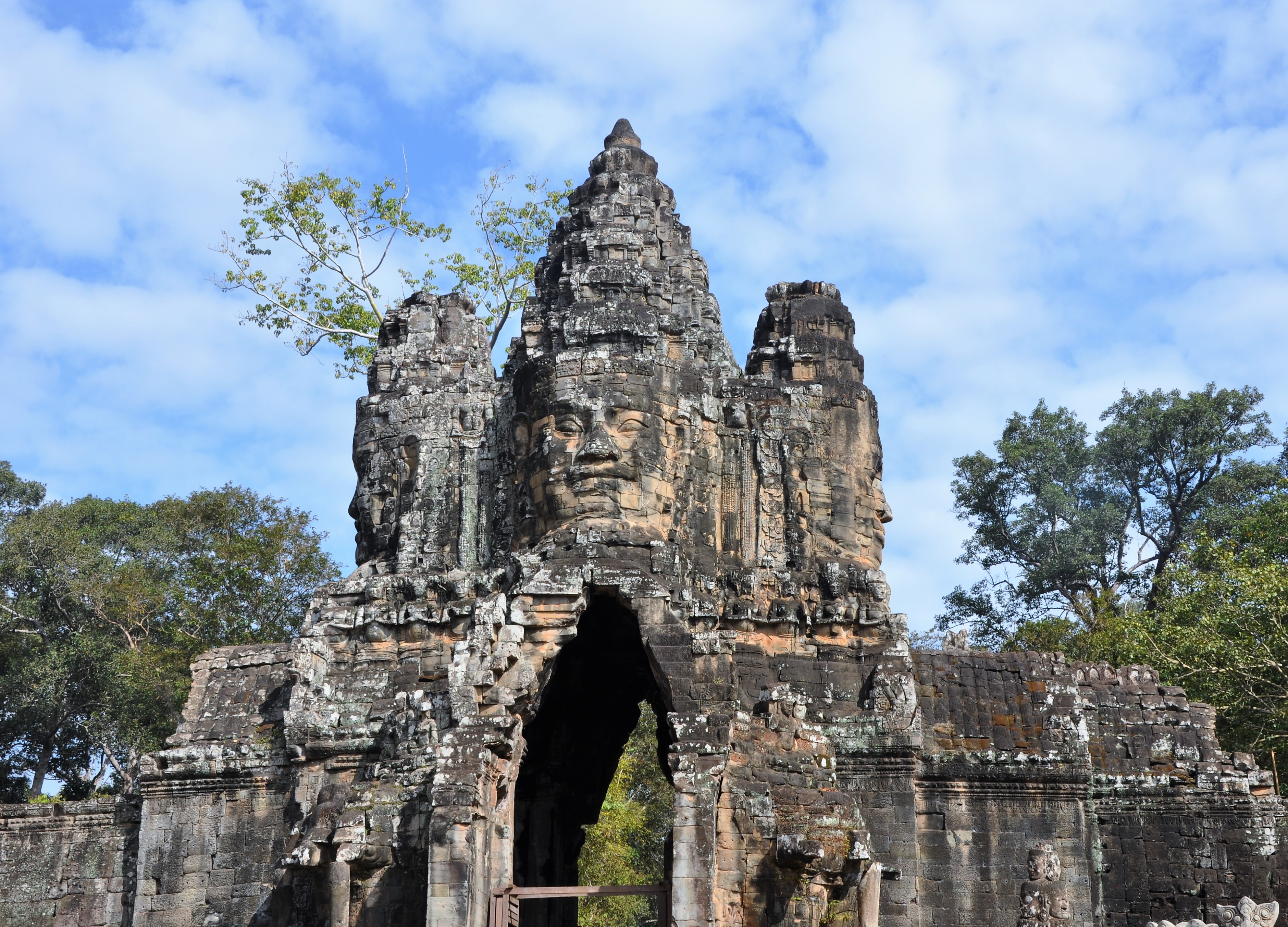
To enter the complex you first have to cross a bridge across the moat surrounding the city walls. The bridge itself is a photography hot-spot. It is not unusual for people to get out of their cars to take photos and thus cause a traffic congestion.

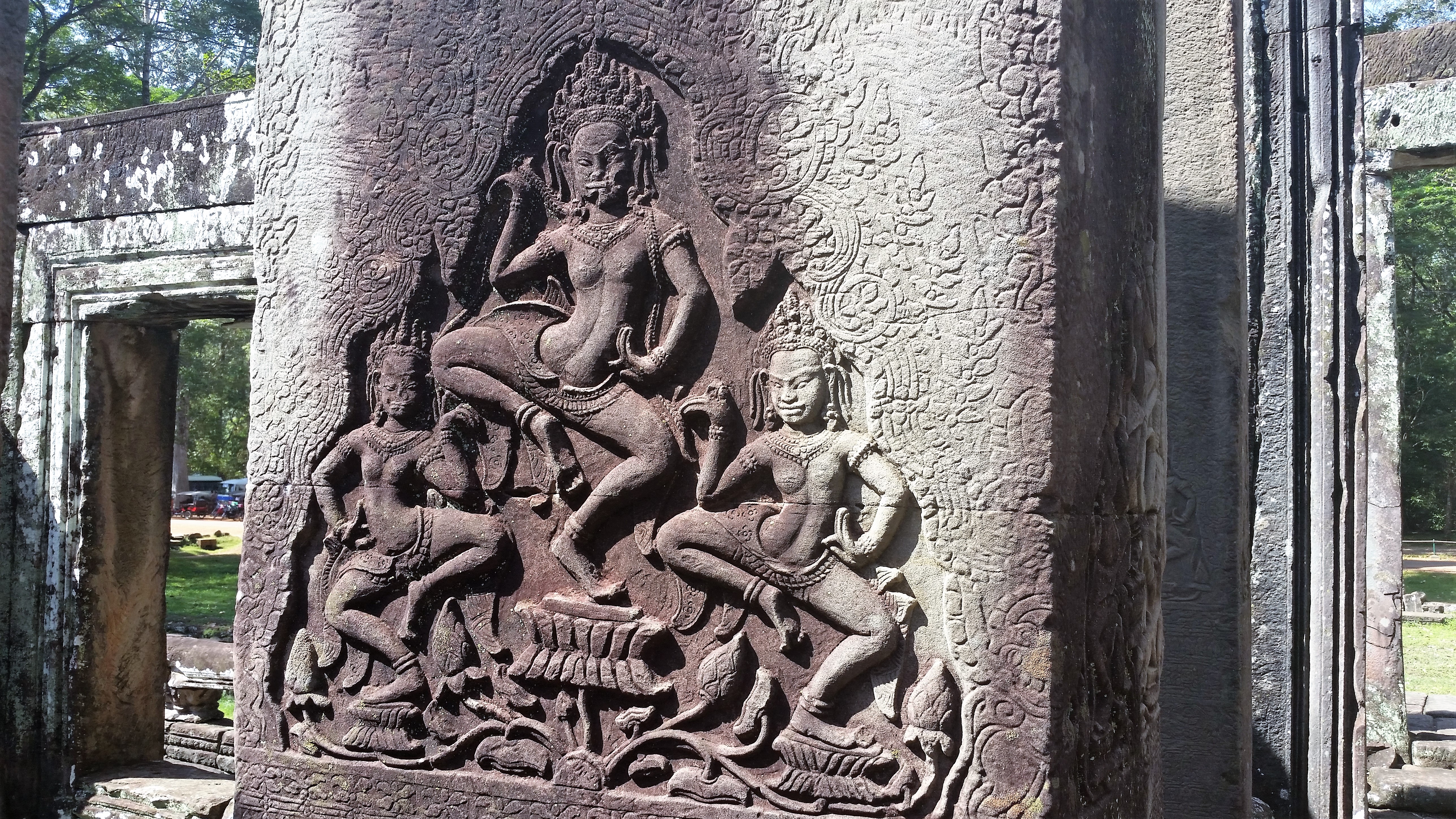
This is the last remaining capital city of the Khmer Empire. Built in the 12th century, the complex contains ruins of numerous temples and structures in the middle of which is the Jayavarman’s state temple, the Bayon, beautifully and richly decorated. The stone carving work throughout the complex is exquisite. It is hard to believe that it was all hand carved. The walls of the temple are decorated with incredibly detail-rich carvings.

To avoid the tourist crowds again, after Angkor Thom we decided to drive to The Banteay Srei Temple that was a little further away but as we found out, it was absolutely worth the 30 min drive. Along the way we got to see a little bit more of the countryside and some of Cambodia’s rice fields. Rice is synonymous with food. It is served everywhere and it comes in various forms…fried, steamed, in the form of noodles, as a desert mixed with fruits and coconut milk, etc.

The Banteay Srei Temple
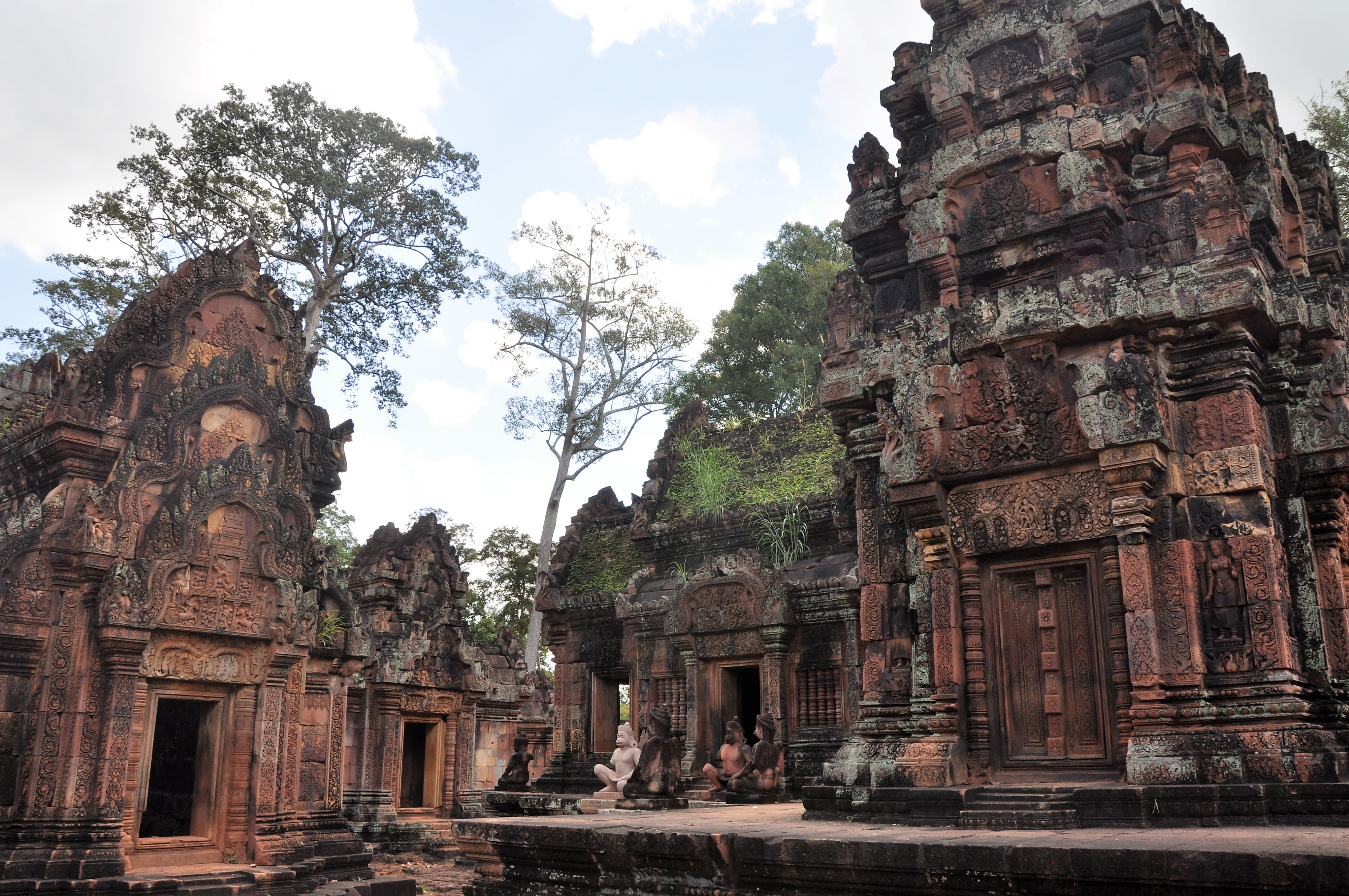
This 10th century Hindu temple dedicated to the Hindu god Shiva lies about 16 mi (25 km) north-east of the Angkor complex of temples. Even though a little out of the way, I would not miss this temple by any means. The intricate details of the wall carvings is mind blowing. The temple has a beautiful red hue because it was built from red sandstone. Sandstone is easily carved and therefore led to the astonishing and elaborate wall carvings. Compared to other temples in the area the structures of Banteay Srei seem almost miniature. Given it’s size and incredible wall art it is largely regarded as the “Jewel of Khmer Art” and rightfully so.
Ta Prohm Temple
Unlike many of the temples in the area that have been heavily restored, Ta Prohm is largely in the same condition that it was found in. The amazing co-existence of man-made structures and jungle trees is astonishing. Today the trees look like they are growing out of the structures. If the trees were removed, the temple would most likely crumble.

The walls of the temple are covered with thousands of carvings of animals. One of the carvings however depicts an actual dinosaur, a stegosaurus to be exact. It is hidden in a quite corner in the back of the temple and is to this day a mystery as to why it is there. It was quite difficult to find given the number of carvings on the walls.

Today the temple is a UNESO World Heritage Site, but it became most famous after the 2001 movie “Lara Croft: Tomb Raider” based on the Tomb Raider video game and starring Angelina Jolie. It is truly a magnificent work of art started by men and completed by mother nature.
Angkor Wat
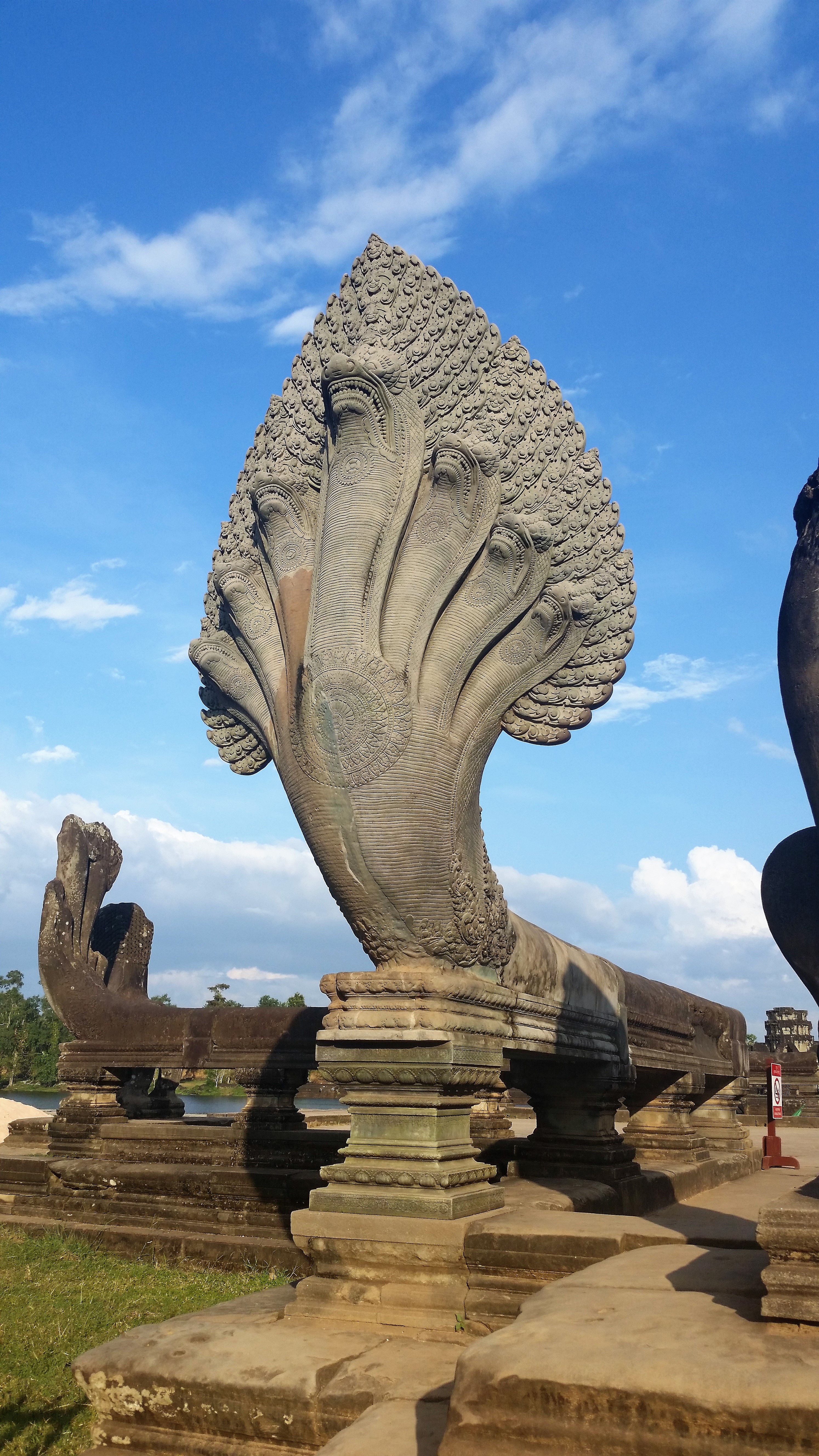
Initially constructed as a Hindu temple and gradually converted into a Buddhist temple by the 12th century the Angkor Wat is the largest religious monument in the world. It encompasses 154 sq mi (400 sq km). When entering the Agkor Wat you will be welcomed by two giant Naga (Seven-headed snake) sculptures. Naga comes from Sanskrit, nag meaning snake and specifically cobra. In Cambodian history the odd-headed Naga represents the male energy, infinity, timelessness, and immortality.
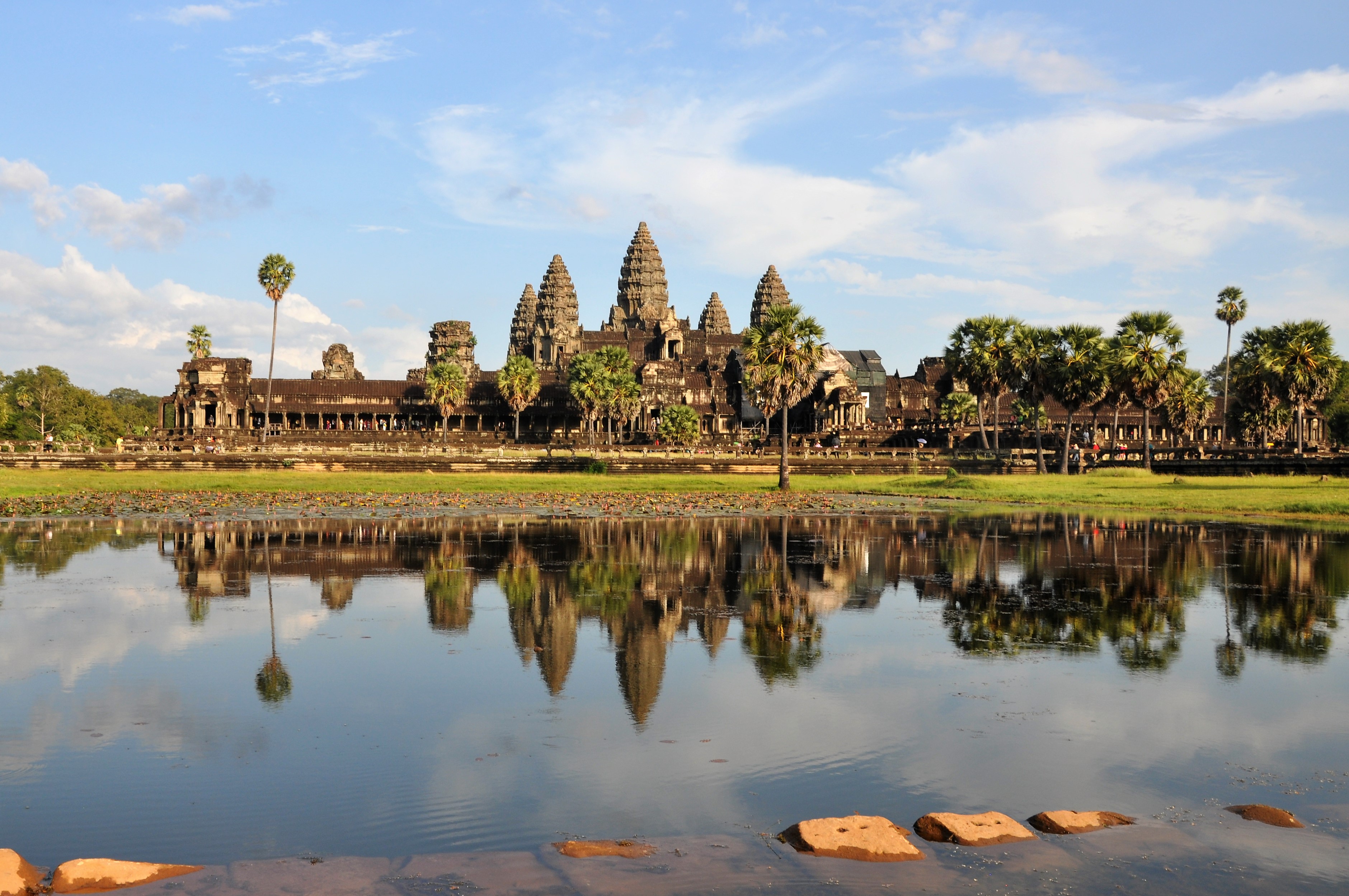
Angkor Wat is the national pride of Cambodia. It is an unique temple in the way that it depicts Mount Meru…home of the gods, a sacred mountain with five peaks. The temple grounds are surrounded by a 190 meter wide moat and there are only two access points to the grounds, one via a sandstone bridge and one via an earth bank. Some of the most popular times to visit the Angkor Wat is in the morning to view the sunrise or in the early evening to witness the sunset.
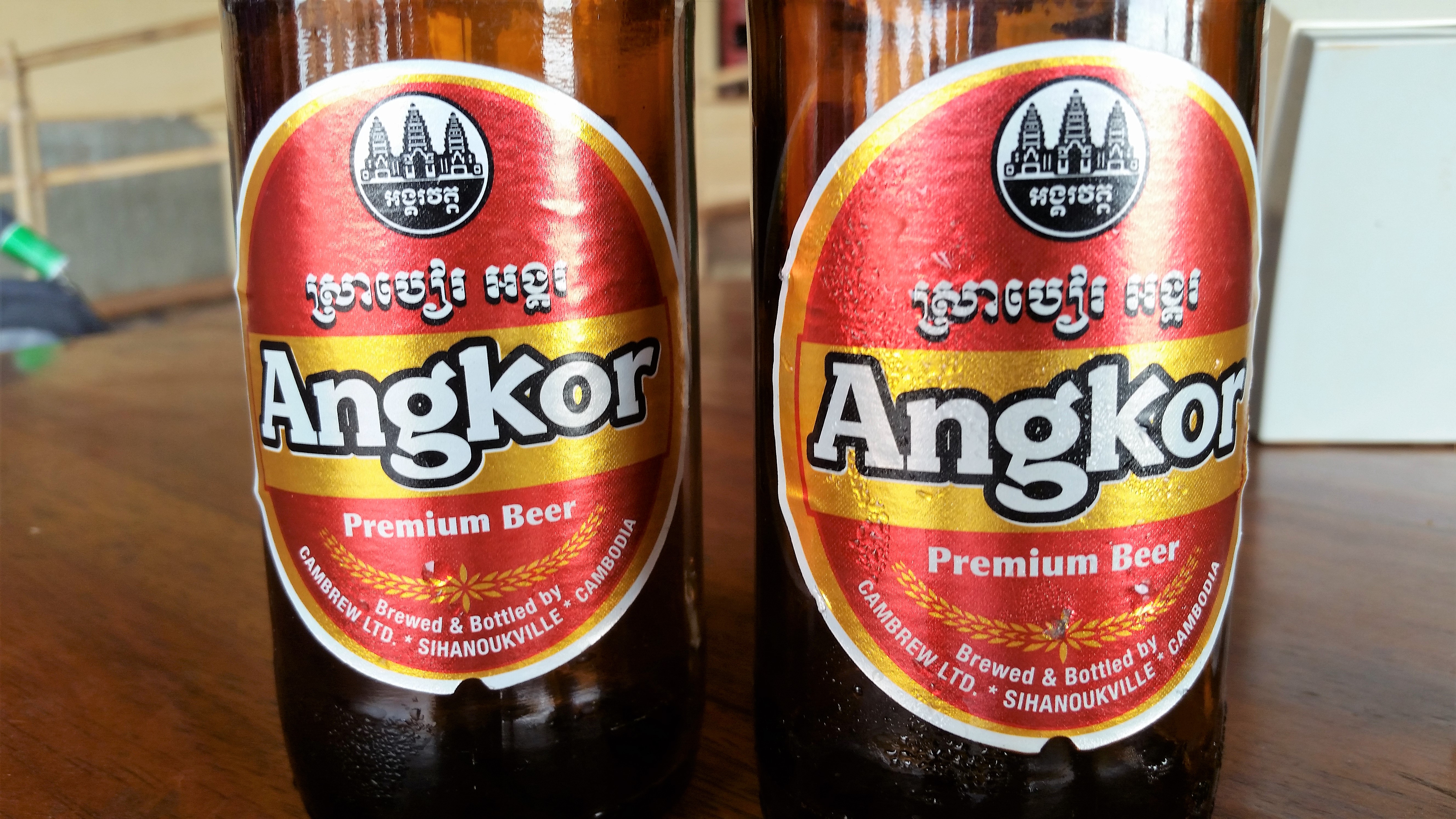
Even the beer in Cambodia is named after the famous Angkor area! Cheers!!!
Kompong Phluk Floating Village
Unlike actual floating villages that move around a body of water at all times, Kompong Phluk is a communal village built on stilts, only partially floating. Located in the Tonle Sap Lake, the village is located about 1.5 hours driving from Siem Reap and then a 30 min boat ride. It was pretty incredible to see people living entirely surrounded by water. The village is home to approximately 3000 residents throughout the year. When the water is extremely low, you can see a little bit of land where the homes are built, but most of the year the only way to get around is by boat.

Preah Ko Temple
The third temple area in the Siem Reap Province is called Rolous and is located about 9 mi (15 km) from the Angkor Temple Complex. It contains a number of smaller temples. Preah Ko is one oldest temples in the area. Built in 879 under Khmer King Indravarman I, it’s purpose was to honor the king’s family in relation to the Hindu deity Shiva. The name of the temple means “The Sacred Bull”. The three main statues represent Nandi, the bull who serves as the mount of Shiva. The temple is small but picturesque.

At the end of the day our driver took us to a local school where we were allowed to go into the classroom. Hidden behind the ruins of an ancient temple was the humble domicile of the school.
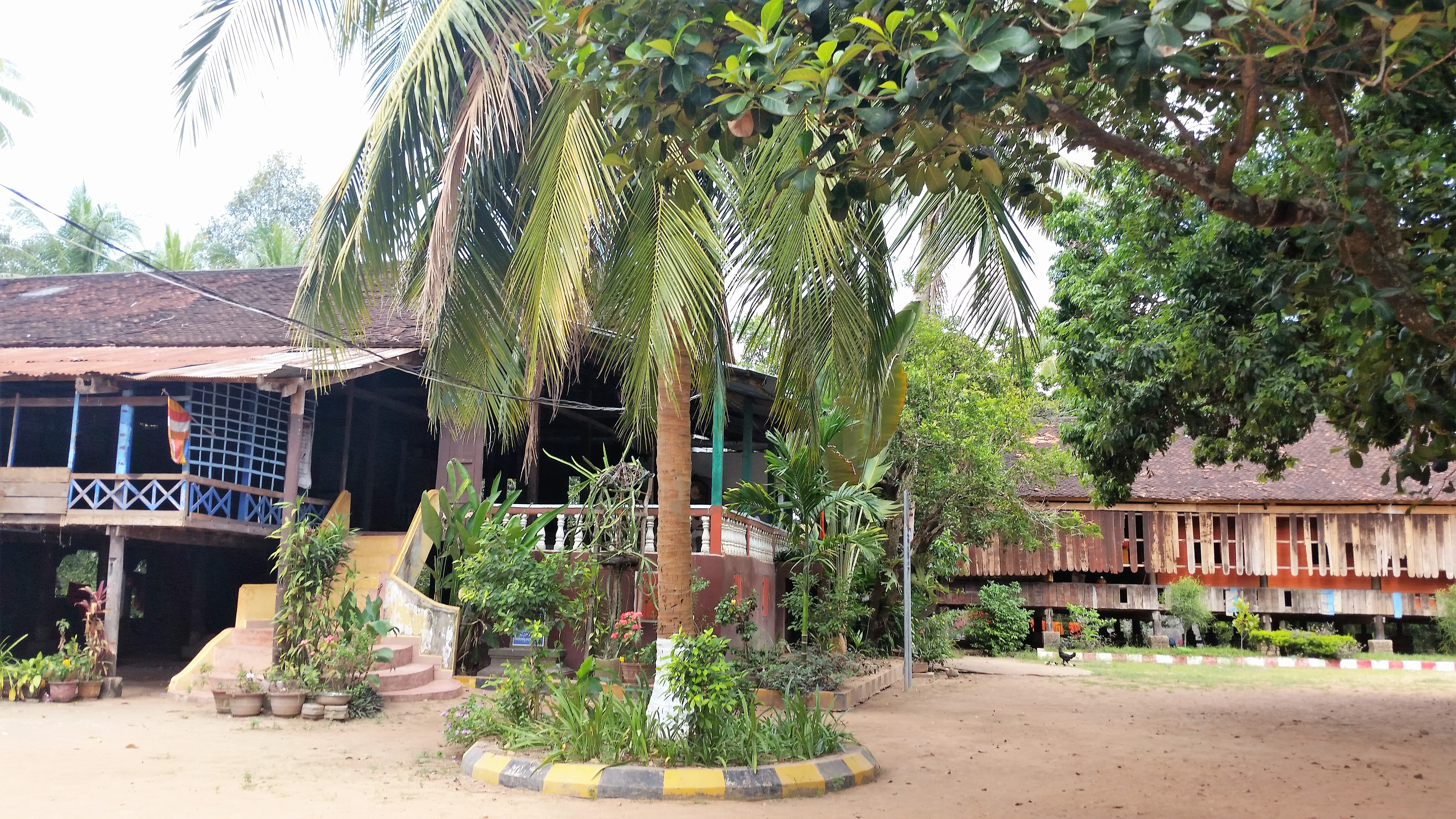
It was truly a special moment to see the kids and how positive and excited they were to be in school. In a country where there is so much poverty, having the ability to attend school is genuinely cherished.

Given all the difficulties the country faces, the Khmer people are truly remarkable. They have such a honestly positive outlook on everyday life. That feeling of being happy and grateful no matter what was really inspiring to us.
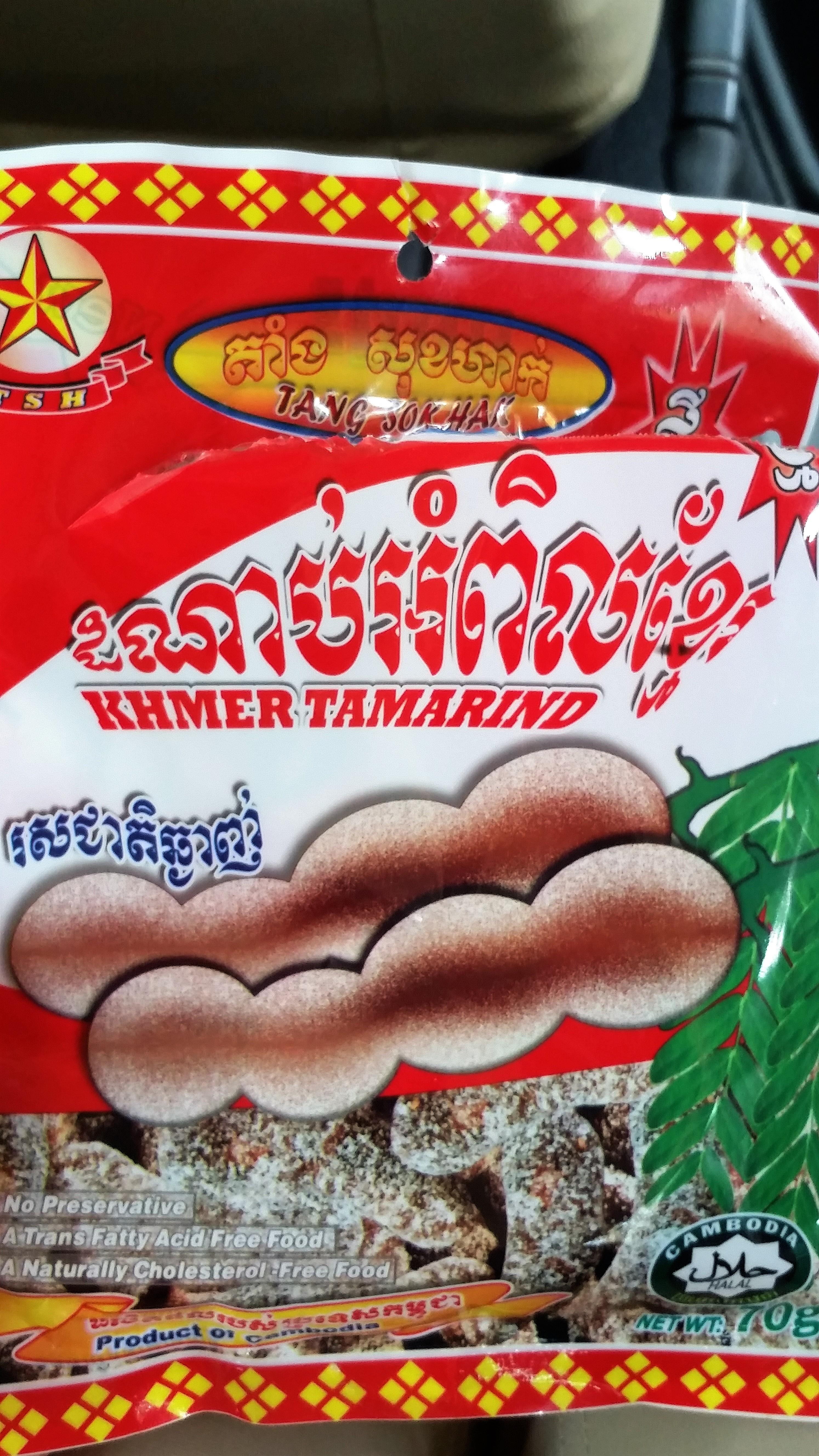
Finally, while visiting Cambodia make sure to try their local candy called Khmer Tamarind. It is a little different than what you may be used to at home, but it is delicious!
Lastly, we want to give you just a few more FYIs before you head out on your Cambodian adventure.
1. Keep in mind that Cambodia is the third most land mined country in the world. Estimates are that there still more than 4 million miles buried across the country. So, while it may be tempting to go off the beaten path, it is always safer to stick to well marked roads and paths. Safety first!
2. Cambodia is not a tipping country. People are paid for their work and a tip is not required. Keep in mind however, people in Cambodia earn an extremely modest daily wage, so tipping can go a long way. Even just a dollar is considered a generous gesture. People will go above and beyond without a tip, but if they did an excellent job, why not reward them. They will truly appreciate it!
 mimski.com